
 Written By :
 ChatGPT
 Perplexity
 Claude
 Gemini
No matter how experienced you are, walking into a wedding without a wedding photography shot list is a gamble. Weddings move fast. Once a moment passes, it's gone. And the one family grouping you forgot to shoot, the one detail you missed, is often the one the couple notices most when they get their gallery back.
A shot list isn't about being rigid or mechanical. It's about having a safety net so your creative mind stays free to notice the unexpected moments while the essential ones are already accounted for.
This guide gives you a complete wedding photography shot list organized by the stages of the day, along with posing ideas, workflow tips, common mistakes to avoid, and guidance on using a questionnaire to customize your list for each couple.
What Is a Wedding Photography Shot List?
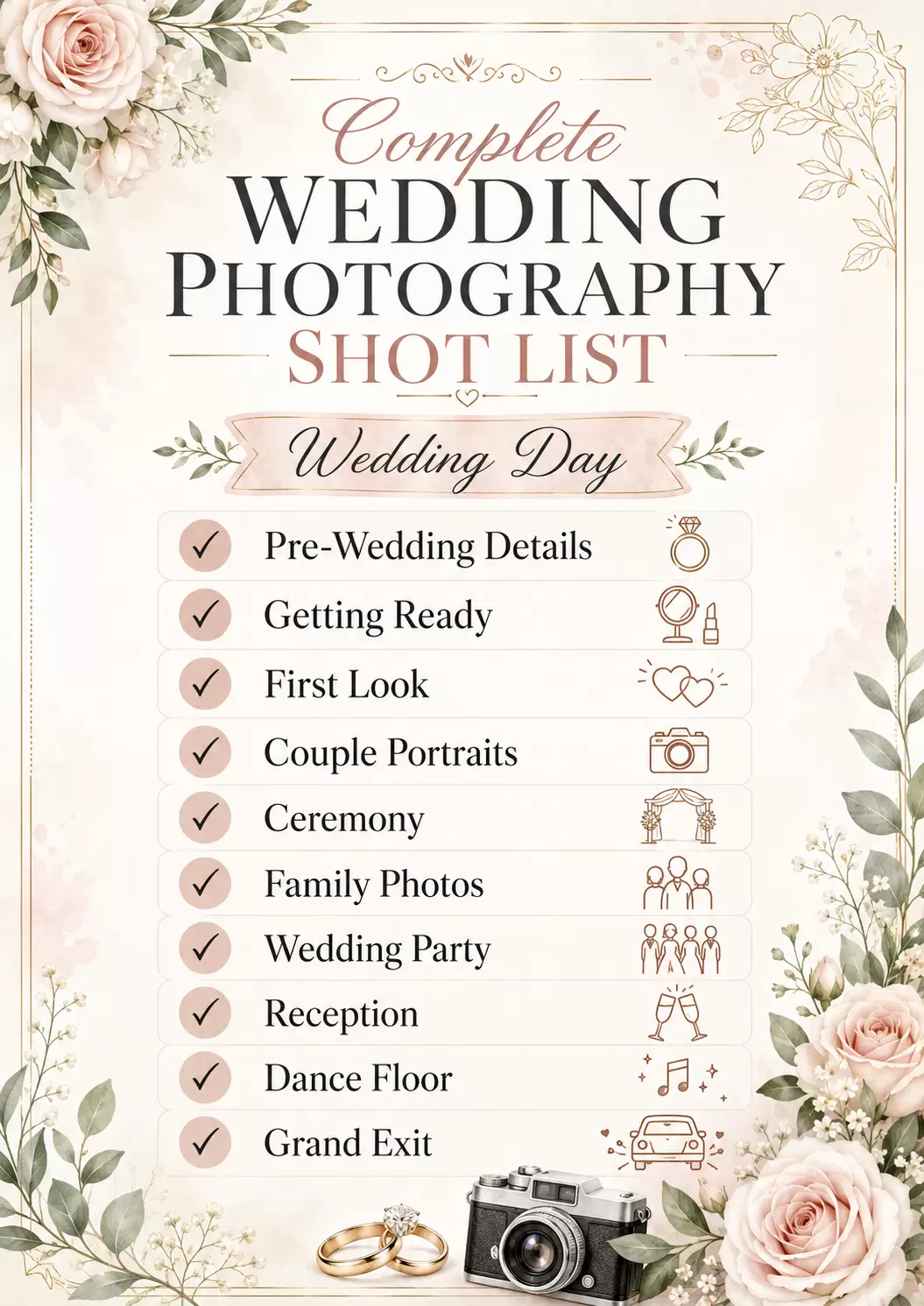
A wedding photography shot list is a curated document outlining the specific images a photographer plans to capture throughout the wedding day. It covers everything from getting-ready details to reception candids, including must-have family combinations, couple portraits, ceremony moments, and reception highlights.
Why Every Wedding Photographer Needs a Shot List
The argument against shot lists usually goes something like: "I prefer to shoot organically and let the day unfold." That's fine as a philosophy, but it doesn't protect you from a couple asking why there's no photo of them with the grandmother who flew in from overseas.
A wedding photography shot list does three things:
- Ensures you don't miss anything the couple specifically wants
- Gives structure to the parts of the day that benefit from it (family formals especially)
- Frees you to be creative during unstructured moments because you're not mentally running through what you might have missed
The list isn't a creative constraint. It's a foundation.
Benefits of Planning Every Stage of the Wedding
When you know what you're capturing and roughly when, you can plan better. You can scout the right spots at the venue ahead of time. You can coordinate with the coordinator or planner without fumbling. You can move efficiently through family formals rather than burning 45 minutes figuring out who goes with who.
Couples notice the difference between a photographer who's in control of the day and one who's reacting to it. A solid wedding photography checklist is how you stay in the former category.
Customizing a Shot List for Each Couple
Your master shot list is a template. Every couple's list should be adjusted based on:
- Their specific family structure (divorced parents, blended families, estranged relatives)
- Cultural or religious traditions that produce unique moments
- The venue and its photographic opportunities
- Their personal priorities (some couples care deeply about detail shots; others just want great portraits)
- Whether they have a first look or prefer not seeing each other before the ceremony
The wedding photography questionnaire you send before the wedding is how you gather this information. More on that below.
Pre-Wedding Photography Checklist
The hours before the ceremony often contain some of the most emotionally rich moments of the day. They also tend to be the most chaotic. A clear pre-wedding wedding photography checklist keeps you organized without missing anything.
Wedding Details to Capture
Before anyone is dressed or ready, photograph the details. These images anchor the wedding album and tell the story of the day before it begins.
Detail shot list:
- Wedding invitation suite (invitation, envelope, RSVP card, details card)
- Rings together (on a ring dish, with flowers, on the invitation)
- Wedding dress hanging or laid flat
- Bridal shoes
- Perfume, jewelry, hair accessories
- Groom's suit, tie, pocket square, cufflinks
- Groom's shoes and watch
- Bouquet and boutonnieres
- Ceremony programs
- Any meaningful heirlooms or sentimental items
- Venue details: table settings, centerpieces, signage, florals, place cards
Arrive at the getting-ready location early enough to photograph these before everything gets put on and moved around. Detail shots take longer than people expect.
Flat Lay Photography Essentials
Flat lays (styled arrangements of wedding details photographed from above) have become a standard part of most wedding galleries. They require a clean surface, good light, and a few minutes of arrangement.
Gather the invitation, rings, perfume, small florals, and any meaningful accessories. A windowsill with natural light is often the best location. Keep it clean and intentional rather than cramming everything in.
Bride Preparation Shots
Getting-ready photos tell the story of the morning and capture authentic emotion before the formality of the ceremony takes over.
Bride getting-ready shot list:
- Hair being styled (close-up of hands and hair, wide shot of the room)
- Makeup application (especially the lip and eye moments)
- Bride looking in the mirror during hair/makeup
- Bridesmaids getting ready around her (candid energy in the room)
- Bride putting on jewelry (earrings, necklace, bracelet)
- Someone helping with the dress (mother, MOH, or bridesmaids)
- Bride zipping or buttoning the dress
- Bride seeing herself in the mirror fully dressed (genuine reaction)
- Shoes going on
- Bouquet in hand for the first time
- Bride alone, fully ready (portrait by window light)
- Bride with mother (genuine moment, not just posed)
- Bride with bridesmaids (group and individual)
- Bride with father (first look if planned, or just candid moments)
- Reading a note or letter from the groom (if applicable)
- Any emotional moments as they happen
Groom Preparation Shots
Groom prep is often quicker and less structured than bride prep. Use that to your advantage and focus on authentic moments.
Groom getting-ready shot list:
- Suit laid out or hanging
- Groom putting on shirt and tying tie (or having help)
- Cufflinks going on
- Boutonniere being pinned
- Shoes being put on
- Watch going on
- Groom checking himself in the mirror
- Groom with groomsmen (candid banter and group portrait)
- Groom with best man
- Groom with father or other significant family member
- Groom reading a note from the bride (if applicable)
- Groom fully dressed, portrait by natural light
First Look and Couple Portrait Shot List
The first look (if the couple chooses to do one) is one of the most photographically rewarding moments of the day. It's private, emotionally genuine, and gives you time for portraits before the ceremony when everyone is freshest.
Capturing Genuine Reactions
Position yourself to capture both faces if possible. For a first look, one common approach is to have the groom facing away while the bride approaches, then photograph from the side to capture both reactions as she taps his shoulder or he turns around.
Don't direct the moment. Let them react. Give them a few seconds before you move in for closer shots.
First look shot list:
- Wide shot of the approach
- Groom's reaction as he turns
- Bride's expression as she sees him react
- Embrace (wide and close)
- Hands held, rings visible
- Detail: foreheads together, eyes closed
- Genuine laughter or tears if they happen
- Walking away together after the moment
Romantic Wedding Photography Poses
After the first look emotion settles, move into couple portraits. Having a go-to set of wedding photography poses helps you move efficiently without the session feeling like a photoshoot.
Natural and romantic poses:
- Walking toward camera holding hands
- Walking away from camera (candid, not looking back)
- Groom whispering in bride's ear (genuine laugh usually follows)
- Forehead to forehead, eyes open or closed
- Embrace from behind with bride looking out
- Looking at each other (not at camera) while holding hands
- Slow dancing without music (gives natural sway and closeness)
- Sitting together: on steps, a bench, or in a field
- Groom lifting bride (if they're comfortable with it)
- Close-up of hands and rings together
- Individual portraits of each person while the other watches
Creative Outdoor Portrait Ideas
If the venue has outdoor space, use it. Look for:
- Archways, doorways, or windows that frame the couple
- Textured walls or architectural details as backgrounds
- Natural light from open shade (avoid harsh midday sun)
- Reflections in water or glass
- Paths or roads for walking shots with leading lines
- Trees or foliage that create natural depth
For golden hour portraits (30 to 45 minutes before sunset), prioritize getting the couple outside. The light at that time of day makes almost any location look beautiful.
Editorial-Style Couple Portraits
For photographers who shoot in a more editorial style:
- Dramatic wide shot with venue as environment
- Silhouette against sky or window light
- Looking away from each other in opposite directions
- Movement: walking, spinning, dress in motion
- Bride adjusting groom's tie or boutonniere
- Groom adjusting bride's veil or hair
Wedding Ceremony Shot List
The ceremony is the legal and emotional heart of the day. It's also the section where you have the least control and the most responsibility. Know your positions, anticipate moments, and move quietly.
Processional Moments
- Grandparents being escorted to seats
- Parents walking down the aisle (both sets)
- Bridesmaids and groomsmen walking in
- Flower girl and ring bearer
- Groom's expression as he sees the bride at the top of the aisle
- Bride and escort at the top of the aisle before walking
- Bride walking down the aisle (wide shot and close-up)
- Guest reactions as the bride enters
- Bride and groom's hands meeting at the altar
Exchange of Vows
- Both faces during the officiant's words
- Tears, smiles, or laughter as they happen
- Close-up of faces during personal vows
- Guests reacting during emotional moments
- Hands held throughout
Ring Exchange
- Ring being placed on each finger (get close)
- Both hands with rings after exchange
- Couple's expressions during the ring exchange
First Kiss
Position yourself at the altar angle and have a second photographer (if you have one) at the back of the aisle for a different angle.
- The lean in before the kiss
- The kiss itself (wide and close if possible)
- Immediate reaction after (laughter, relief, joy)
- Guest reactions
Recessional Celebration
- Couple walking back up the aisle together
- Guest cheering, throwing petals, blowing bubbles
- Couple's expressions of pure happiness
- Wide shot of the full aisle with guests on both sides
Family and Group Photo Checklist
Family formals are the section of the day where a clear list makes the biggest practical difference. Without one, this segment runs long and creates stress. With a specific list, you can move through it in 20 to 30 minutes.
How to Run Family Formals Efficiently
Before the day, ask the couple for a specific list of family groupings via the wedding photography questionnaire. Number them. On the day, call groups by number or name and keep moving.
Designate a family wrangler, ideally someone who knows both families well, to help gather people quickly. This is often the best man, maid of honor, or a coordinator.
Immediate Family Photos
Bride's side:
- Bride with mother
- Bride with father
- Bride with both parents
- Bride with siblings (individual and together)
- Bride with full immediate family
- Bride with maternal grandparents
- Bride with paternal grandparents
- Bride with all grandparents (if applicable)
Groom's side:
- Groom with mother
- Groom with father
- Groom with both parents
- Groom with siblings (individual and together)
- Groom with full immediate family
- Groom with maternal grandparents
- Groom with paternal grandparents
Both families:
- Couple with bride's parents
- Couple with groom's parents
- Couple with all four parents
- Full combined family group
Extended Family Groups
Ask the couple specifically which extended family groupings matter to them. Aunts and uncles, cousins, childhood friends who are family. Don't assume. Some families want everything; others want just immediate family.
Wedding Party Portraits
- Full wedding party together (multiple poses)
- Bridesmaids group (with and without bride)
- Groomsmen group (with and without groom)
- Individual bridesmaids with bride
- Individual groomsmen with groom
- Pairs (bridesmaid with corresponding groomsman)
- Just the couple with the wedding party in a relaxed, candid moment
Friends and Special Guests
Ask the couple ahead of time if there are specific friends or guests they want photographed. A childhood best friend who isn't in the wedding party, a mentor, a colleague who traveled far to attend. These are easy to miss without being told in advance.
Wedding Reception Shot List
The reception is where the formality loosens and the celebration begins. It's also where the timeline gets unpredictable and moments happen fast.
Grand Entrance
- Wide shot of the doorway as the wedding party enters
- Each couple in the wedding party being announced
- Couple's grand entrance reaction
- Guest reactions, cheering, clapping
- Couple's first moments together at the reception
First Dance
- Couple walking onto the dance floor
- Wide establishing shot of the first dance with guests watching
- Close-up of faces (especially any emotional moments)
- Hands together, rings visible
- Guest reactions (parents watching, friends smiling)
- Any dips, spins, or playful moments
- Final pose at the end of the song
Parent Dances
- Bride and father dance (same coverage as first dance)
- Groom and mother dance
- Both couples on the floor together (if it happens simultaneously)
- Emotional moments: tears, laughter, whispered words
Toasts and Speeches
- Speaker delivering the toast (close-up and wide shot)
- Couple listening and reacting
- Guest reactions (laughter, tears)
- The raised glasses at the end of the toast
- Couple kissing after the toast if it happens
Cake Cutting
- Cake detail shot before cutting (get this earlier in the reception while it's pristine)
- Couple holding the knife together
- The cut
- Feeding each other (genuine reaction, not staged)
- Laughter if they're playful about it
- Close-up of the cut cake slice
Bouquet and Garter Toss
- Crowd gathering
- Bride/groom preparing to toss
- The toss in motion (fast shutter speed)
- The catch
- Winner's reaction and crowd reaction
Open Dance Floor
This is where candid magic happens. Stay active on the dance floor.
- Wide shot of full dance floor
- Small groups dancing together
- Couple dancing together during open dancing
- Elderly guests dancing (often the most joyful images of the night)
- Children on the dance floor
- Guests singing along to songs they love
- Spontaneous group moments
Reception Details
- Table settings before guests are seated
- Centerpieces and floral arrangements
- Escort card display or seating chart
- Menu cards
- Wedding favors
- Dessert table or sweet bar
- Lighting (string lights, uplighting, chandeliers)
- Band or DJ setup
- Cake table full setup
Must-Know Wedding Photography Poses
Wedding photography poses are a tool, not a formula. The goal is to create images that feel natural while being intentionally composed. The best poses are the ones couples don't feel like they're doing.
Natural Standing Poses
- Facing each other holding both hands, slight lean toward each other
- One person slightly in front, other person's hands on their shoulders from behind
- Both looking in the same direction, groom slightly behind bride
- Walking side by side naturally, holding hands
Walking and Movement Poses
Movement breaks the stiffness of static poses:
- Walking toward the camera, natural pace, looking at each other or laughing
- Walking away from camera on a path or through a field
- Spinning: hold hands and have the bride twirl, capturing the dress movement
- Running toward camera (works in some styles, not all)
- Sitting down and standing up transitions often produce natural in-between moments
Romantic Close-Up Poses
- Foreheads together, eyes closed, noses almost touching
- Groom cups bride's face with both hands
- Looking at each other from a close distance (not kissing, just present)
- Bride's head resting on groom's chest, both relaxed
- Close-up of intertwined hands with rings prominent
For prompts that generate natural expressions, try: "Tell them something only they know." "Whisper why you fell in love with them." Most couples start talking, get shy, and laugh. That laugh is what you're capturing.
Large Group Posing Tips
- Use levels: some sitting, some standing, some on stairs
- Keep the group tight (people instinctively spread out; push them together)
- Call for attention clearly and directly
- Shoot multiple frames in rapid succession for any group over ten people (eyes closed and blinks are inevitable)
- Have a second camera angle for large groups if possible
Wedding Photography Workflow for a Smooth Wedding Day
A strong wedding photography workflow is what separates photographers who feel in control on wedding days from those who feel like they're constantly catching up.
Planning Before the Event
Two to three weeks before the wedding:
- Review the completed wedding photography questionnaire
- Finalize the shot list with couple-specific additions
- Scout the venue if you haven't shot there before (or review photos/videos from other photographers who have)
- Confirm timeline with the couple and coordinator
- Check and prepare all equipment
- Charge all batteries and format all memory cards
- Prepare backup equipment (second camera body, extra lenses, backup flash)
Timeline Coordination
The timeline is your greatest planning tool. Know:
- When coverage starts and where you need to be
- How long each segment is allotted
- Where the light will be at different times of day (golden hour especially)
- Where you're going for portraits and how long travel takes within the venue
- When the coordinator needs you to be at specific locations
Build buffer time into portrait sessions. Something always runs long somewhere. If you plan 30 minutes for couple portraits and get 20, you still have solid images. If you plan 20 and get 10, you're rushing.
File Backup Strategy
This is non-negotiable. Card failure during a wedding is rare but devastating when it happens.
- Shoot to dual card slots if your camera body has them (one card as primary, one as backup)
- Back up cards to a laptop or portable drive during any downtime (cocktail hour is ideal)
- Never format a card until images are backed up in at least two places
- Label and store cards systematically so nothing gets confused or overwritten
Image Selection and Editing
Your post-wedding wedding photography workflow should be consistent:
- Ingest and back up files immediately after the wedding
- Cull: select your final images (most photographers deliver between 400 and 800 images for a full-day wedding, though this varies)
- Color grade: apply your base edit style to the full selection
- Fine-tune: adjust exposure, color, and tone on individual images as needed
- Export in full resolution to your delivery platform
Set realistic turnaround expectations in your contract and meet them. Most photographers deliver within 4 to 8 weeks.
Gallery Delivery Process
Use a professional gallery delivery platform: Pixieset, ShootProof, and CloudSpot are all solid options. When you deliver the gallery:
- Send a personalized email, not just a link
- Include instructions on how to download, share, and order prints
- Remind them of the gallery expiration date
- Ask them to share a review if they love the images
Common Wedding Photography Mistakes to Avoid
Even experienced photographers fall into these traps. Knowing them in advance is half the battle.
Forgetting Family Combinations
The number one complaint from couples after they receive their gallery: "Where's the photo of me with [specific person]?" Without a detailed family list from the wedding photography questionnaire, it's almost impossible to remember every combination during the session itself.
Get the list in writing. Go through it systematically on the day.
Missing Detail Shots
Detail shots are often the ones that get skipped when the day runs late. Build detail photography into the very beginning of your timeline, before getting ready begins, so it's done regardless of what happens later.
Poor Lighting Preparation
Walking into a dark reception venue with only one flash unit and no backup plan is a wedding photography mistake that shows in the final images. Know the venue's lighting situation in advance. Bring appropriate gear. If you're shooting in a venue with challenging light, test your settings before the event if possible.
Not Backing Up Memory Cards
One card failure at a wedding is a career-defining disaster. Dual card slots and mid-day backups are standard practice for a reason. Don't skip this part of your wedding photography workflow.
Ignoring the Wedding Timeline
The timeline affects everything. If you're not watching the time during family formals, you'll run over and cut into portrait time. If you lose track of when golden hour hits, you'll miss it. Keep an eye on the clock throughout the day without being visibly anxious about it.
Being Invisible When You Shouldn't Be
Candid photographers sometimes take this too far and become completely passive. Some moments need a quiet direction. "Can you both look at each other for just a second?" is not intrusive. It often produces one of the best images of the day.
Underestimating the Reception
Many photographers put most of their energy into the ceremony and portraits and then coast through the reception. The reception contains some of the most genuine, joyful moments of the day. Stay engaged and keep shooting.
Using a Wedding Photography Questionnaire to Prepare Clients
A wedding photography questionnaire sent two to four weeks before the wedding is one of the most useful tools in your workflow. It collects everything you need in one place and positions you as a professional who is genuinely prepared.
Essential Questions to Ask Before the Wedding
General logistics:
- Full names of both partners
- Wedding date and ceremony start time
- Ceremony and reception addresses
- Getting-ready location and address
- Name and contact of wedding coordinator or planner
Timeline:
- What time does the bride start getting ready?
- Is there a first look planned?
- What time does the ceremony begin?
- What is the reception timeline (grand entrance, dinner, first dance, speeches, cake cutting)?
- Is there a specific end time for coverage?
People:
- Names of the wedding party
- Any people you especially want captured (out-of-town guests, elderly relatives, childhood friends)
- Any family situations we should be aware of (divorced parents who shouldn't be in the same frame, estranged relatives, etc.)
Shot priorities:
- Are there any specific shots or moments that are especially important to you?
- Any cultural or religious traditions we should know about?
- Any moments you definitely don't want photographed?
Family Photo Requests
Ask for this as a numbered list. Something like:
"Please list the family photo groupings you'd like in order of priority. We'll work through them systematically during cocktail hour."
Having this list numbered lets you call groups efficiently on the day: "Group 4, that's the bride with her maternal grandparents, can I get you to come up please?"
Timeline Preferences
Ask the couple if there's anything in the timeline that's especially important to them. Some couples care deeply about portraits. Others prioritize being present with guests at cocktail hour and want portraits kept short. Knowing this lets you plan accordingly rather than assuming.
Venue and Vendor Details
Ask for:
- Venue website or contact (helpful if you haven't shot there before)
- Names and contacts for key vendors: florist, coordinator, DJ or band
- Parking instructions for vendors
- Any venue restrictions on flash, movement during ceremony, or restricted areas
Our guide on wedding photography packages covers how to integrate the questionnaire into your overall booking and client management workflow.
Wedding Photography Tips for Better Results
Communicate with the Couple
The best wedding photography tip for any photographer is also the most obvious: talk to your couple before the day. The more you know about them, their family dynamics, their vision, and what matters most to them, the better positioned you are to deliver something that genuinely moves them.
Scout the Venue Early
If you've never shot at a venue before, visit it in person or study it thoroughly through photos and videos. Know where the light comes from at different times of day, where you'd take the couple for portraits, and what the ceremony and reception spaces look like.
Work with the Wedding Planner
A good coordinator is one of your best assets on a wedding day. They're managing the timeline, wrangling guests, and keeping things moving. Get their number, introduce yourself before the day, and communicate throughout the event. When you both know what the other needs, the day runs more smoothly for everyone.
Prepare Backup Equipment
Gear failure on a wedding day is genuinely stressful. Standard backup preparation:
- Second camera body (always)
- Multiple lenses covering similar focal lengths
- Extra flash units and batteries
- Spare memory cards
- Battery charger accessible during the day
You may never need the backup gear. But shooting a wedding without it is an unnecessary risk.
Stay Flexible Throughout the Day
Timelines shift. Vendors run late. Weather changes. The couple decides they want an extra 15 minutes with their grandparents. Every wedding day involves at least one thing going differently than planned.
The photographers who handle this well are the ones who've mentally prepared for it. Have contingency plans for portrait locations if the primary spot doesn't work. Know which shots are absolute priorities versus nice-to-haves. Stay calm and communicate clearly.
Wedding Photography Tips for Marketing Your Business
Getting better at photography is one track of professional growth. Getting more couples to find and book you is the other. A great wedding photography shot list impresses clients once they've booked. Marketing is what gets them there in the first place.
If you're a wedding photographer looking to grow your bookings through search, our SEO for wedding photographers service is built specifically for this. We help photographers rank for local searches, build their online presence, and attract couples who are actively looking for someone with their style and approach.
We also offer wedding business marketing and wedding SEO services that cover everything from your website's search visibility to local listings and content strategy.
If your website isn't converting visitors into inquiries at the rate it should, our web design and development team builds photography websites that are designed for both visual impact and client conversion. You can also explore our local SEO services to improve your visibility in your specific market.
Downloadable Wedding Photography Shot List Template
Below is a condensed, printable version of the full wedding photography shot list covered in this guide. Print it, customize it, and bring it to every wedding.
Master Shot List Template
PRE-WEDDING DETAILS
- Invitation suite and stationery
- Rings (together and separately)
- Dress, shoes, jewelry, accessories
- Groom's suit, shoes, watch, cufflinks
- Bouquet and boutonnieres
- Venue details: florals, signage, table settings
GETTING READY
- Hair and makeup in progress (bride)
- Dress going on, shoes on
- First mirror moment fully dressed
- Bride with mother, bridesmaids, father
- Groom dressing, boutonniere pinned
- Groom with groomsmen, father, best man
FIRST LOOK (IF APPLICABLE)
- Approach and reveal
- Genuine reactions (both faces)
- Embrace and close-up moments
COUPLE PORTRAITS
- Walking poses (toward and away from camera)
- Romantic close-ups
- Creative venue-specific shots
- Golden hour portraits (if timing allows)
CEREMONY
- Processional (all parties)
- Couple at the altar
- Vows and ring exchange
- First kiss (wide and close)
- Recessional with guests
FAMILY FORMALS
- [Use numbered list from questionnaire]
WEDDING PARTY
- Full group, bridesmaids group, groomsmen group
- Individual attendants with couple
RECEPTION
- Grand entrance
- First dance, parent dances
- Toasts and speeches
- Cake cutting
- Bouquet toss (if applicable)
- Open dancing
- Reception details
Tips for Personalizing the Checklist
- Add any cultural or religious traditions specific to the couple
- Note any family situations that affect groupings
- Add golden hour timing based on sunset time for that date and location
- Include vendor names and contacts on the document for quick reference on the day
- Number the family formals based on the couple's questionnaire response
Frequently Asked Questions
What should be included in a wedding photography shot list?
A complete wedding photography shot list should cover: pre-wedding details and getting ready, first look (if applicable), couple portraits, ceremony processional through recessional, family and wedding party formals, and reception moments from grand entrance through dancing. Customize it for each couple using information from the wedding photography questionnaire.
What is the difference between a wedding photography checklist and a shot list?
A wedding photography checklist tends to be broader, covering preparation, equipment, workflow, and client communication alongside the actual shots. A wedding photography shot list is specifically the list of images to capture during the event itself. Both are useful tools; they serve slightly different purposes.
What are the best wedding photography poses for couples?
The most natural wedding photography poses involve movement or prompts rather than static positioning. Walking together, the groom whispering something to make the bride laugh, slow dancing without music, and forehead-to-forehead moments all tend to produce genuine expressions. Avoid poses that require couples to hold uncomfortable positions for more than a few seconds.
What are the most common wedding photography mistakes?
The most common wedding photography mistakes include missing family groupings due to no prior list, skipping detail shots when the day runs late, inadequate lighting preparation for dark reception venues, not backing up memory cards during the event, and losing track of the timeline during family formals.
How does a wedding photography questionnaire help photographers?
A wedding photography questionnaire collects essential information before the wedding day, including family photo lists, timeline details, venue logistics, vendor contacts, and couple priorities. It prevents last-minute scrambling, reduces on-day confusion, and helps photographers deliver a gallery that matches what the couple actually wanted.
Final Thoughts
A thorough wedding photography shot list is one of the simplest and most effective tools a photographer can use. It costs nothing except the time to put it together, and it protects both you and your clients from the one thing that can't be fixed after the fact: a missed moment.
Use the lists in this guide as your master template. Customize each one based on what you collect from the wedding photography questionnaire you send before the wedding. Build it into your standard wedding photography workflow so it becomes automatic rather than something you scramble together the night before.
The couples who give you glowing reviews aren't always the ones whose weddings went perfectly. They're often the ones who felt you were genuinely prepared, calm, and in control. A solid shot list is a big part of how you create that impression.
If you're a wedding photographer looking to grow your client base and show up in search when couples are actively looking for photographers in your area, the team at Just Digital Gurus specializes in exactly that. Our SEO for wedding photographers and wedding business marketing services are built for photographers who want consistent bookings from organic search.
Book a call or get in touch to talk about what growing your photography business looks like.

Your comment will appear after approval.