
 Written By :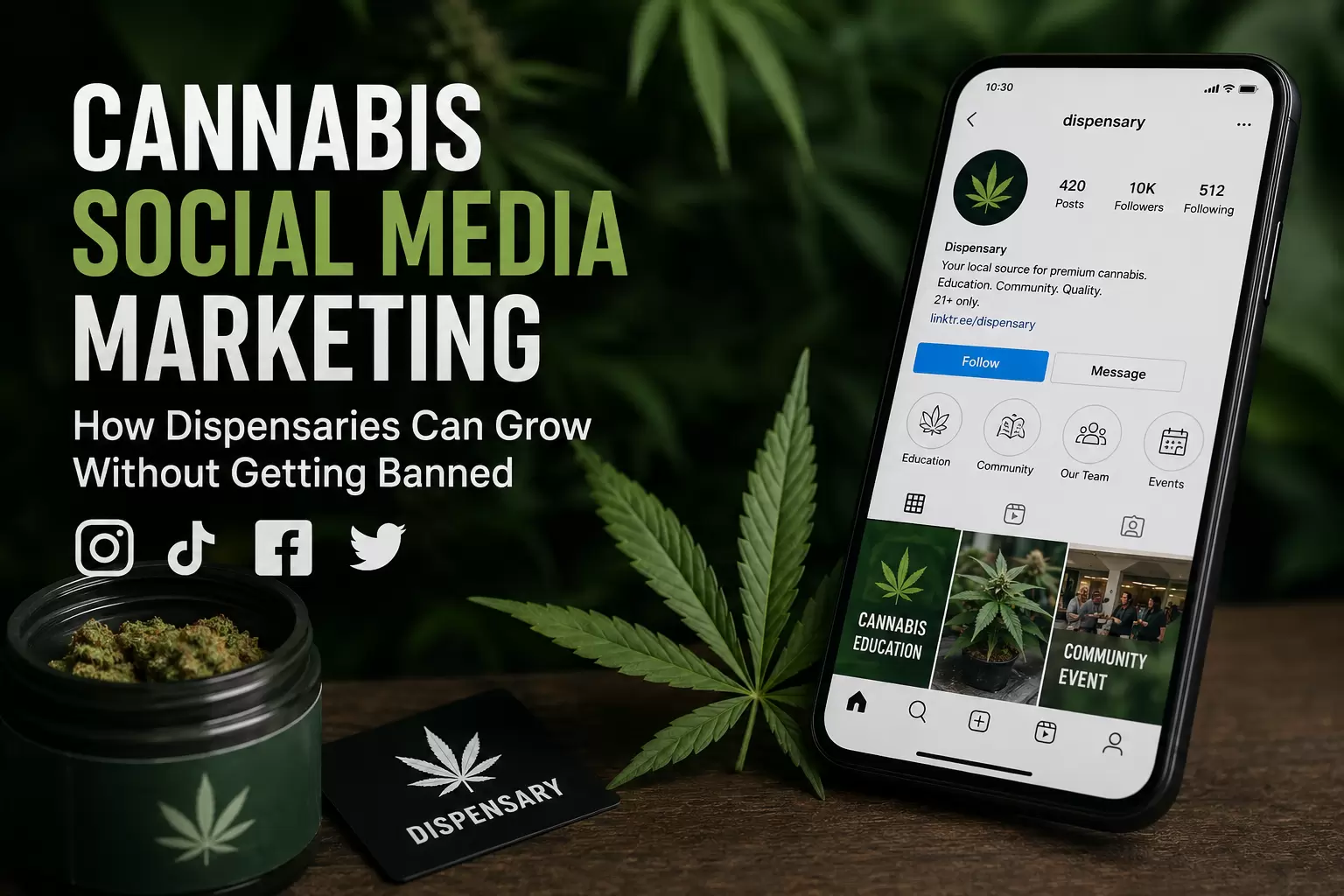
 ChatGPT
 Perplexity
 Claude
 Gemini
Social media should be one of the best marketing channels for dispensaries. You have a visually interesting product, a passionate customer base, and a culture that practically built itself on community. And yet, cannabis brands get shadowbanned, restricted, and outright deleted from platforms constantly, often without warning and sometimes without a clear reason.
That's the reality of dispensary social media in 2025. The platforms aren't built for cannabis. Their policies are vague, inconsistently enforced, and written by people who probably don't distinguish between a licensed dispensary and an illegal operation. So you're left trying to build an audience on platforms that tolerate you at best.
This guide is about doing it anyway, smartly. We'll cover what actually gets cannabis accounts banned, how to navigate Instagram and TikTok without constantly looking over your shoulder, how to use influencer marketing without creating liability, and what content actually works for dispensaries that want to grow a real following.
What Is Dispensary Social Media Marketing?
Dispensary social media marketing is the practice of using platforms like Instagram, TikTok, Facebook, LinkedIn, and X (formerly Twitter) to build brand awareness, engage customers, and drive traffic for cannabis retail businesses.
In theory, it works like any other social media marketing. You post content, build an audience, and convert that audience into customers. In practice, dispensary social media comes with a layer of complexity that most other businesses don't deal with.
The core challenge: Cannabis is federally illegal in the United States. That means social platforms, which operate under federal jurisdiction and advertiser-driven business models, have every incentive to limit cannabis content. Paid advertising is essentially off the table on most major platforms. Organic reach gets throttled. Accounts get reported and removed.
Cannabis social media marketing, done right, is about working within those constraints. It's about building a brand presence that doesn't rely on product promotion and doesn't hand platforms a reason to pull the plug on your account.
Why Cannabis Brands Get Banned on Social Media
If you've had a dispensary account suspended or removed, you're not alone. It happens to licensed, compliant businesses all the time. Here's why.
The most common reasons cannabis accounts get banned:
- Platform policies treat cannabis as a restricted category. Regardless of your state's laws, Instagram, TikTok, and Facebook all classify cannabis as a controlled substance under their community guidelines. Content that promotes the sale of cannabis, shows products being consumed, or directs users to purchase cannabis can trigger removal.
- Automated moderation doesn't understand context. These platforms use AI-driven content moderation at massive scale. Algorithms flag keywords, hashtags, and image patterns associated with cannabis without any nuance. A post about cannabis education can get flagged the same way a post promoting illegal sales would.
- Hashtags get you caught. Popular cannabis hashtags like #weed, #cannabis, and #marijuana have been restricted on Instagram for years. Using them doesn't just limit your reach. It can flag your account for review.
- Competitor or user reports. Anyone can report your account. Even if you're doing nothing wrong, enough reports can trigger an automated review process that results in suspension.
- Age-gating isn't built in. Platforms don't have a reliable mechanism to verify that cannabis content is only reaching adults. That makes them nervous, and it's part of why they'd rather restrict cannabis content broadly than try to manage it carefully.
The algorithm doesn't know you're a licensed dispensary. It just sees cannabis content and applies the same rules it would to anything else in that category.
Understanding why bans happen helps you make smarter decisions about what you post, how you caption it, and which hashtags you use.
Cannabis Social Media Restrictions Dispensaries Must Understand
Let's be specific about what the restrictions actually look like across major platforms in 2025.
| Platform | Paid Ads Allowed | Organic Cannabis Content | Key Restriction |
|---|---|---|---|
| No | Limited | No sales promotion, no consumption imagery | |
| No | Limited | Same as Instagram, Meta policy applies | |
| TikTok | No | Restricted | Cannabis content may be removed or age-gated |
| YouTube | No | Allowed with age gate | Cannot be monetized |
| Limited | Generally allowed | B2B content performs best | |
| X (Twitter) | Limited in some regions | Allowed | Less consistent enforcement |
| No | Restricted | Cannabis product pins often removed |
Worth knowing: LinkedIn is one of the most underused platforms for cannabis brands. Industry news, company culture, hiring posts, and thought leadership content tend to do fine there without the same restriction risk you face on Meta and TikTok.
Knowing which platforms restrict what helps you calibrate your strategy instead of posting the same content everywhere and hoping for the best.
Instagram Cannabis Policy 2025: What to Avoid
Instagram remains one of the most important platforms for dispensary brand building, despite the restrictions. The visual format works well for cannabis brands, and the user base skews toward the demographic most dispensaries are targeting.
What to avoid based on current Instagram cannabis policy:
- Direct sales language like "buy now," "order online," or "shop our menu"
- Videos or images showing people smoking, vaping, or consuming cannabis
- Restricted hashtags (search before you use any cannabis-related tag)
- Product pricing listed in posts or captions
- Bio links that go directly to a Weedmaps or Leafly listing
- Purchase calls to action in any form
Pro tip: Before adding any cannabis hashtag to your posts, search it on Instagram first. If the hashtag page shows limited results or a "content hidden" notice, skip it entirely. Stick to dispensary-specific, location-based, or lifestyle hashtags that aren't flagged.
What works better on Instagram:
- Staff spotlights and team culture posts
- Behind-the-scenes content
- Community events and local involvement
- Educational carousels about terpenes, cannabinoids, or consumption methods
- Brand story and values content
- Customer experience posts that don't show consumption
Dispensary TikTok Strategy: How to Grow Without Risky Promotion
TikTok is complicated for dispensaries, but it's not a lost cause. The platform's algorithm is genuinely powerful for organic reach, and cannabis-adjacent content, meaning lifestyle, education, and culture, can perform well without triggering restrictions.
TikTok's community guidelines state: Content that "trades, markets, or provides access to regulated substances" is not allowed. Cannabis content may be age-restricted or made ineligible for the For You feed in some regions.
A dispensary TikTok strategy that works looks more like a media brand than a retail store.
Content types that perform well on TikTok without crossing into restricted territory:
| Content Type | Why It Works | Risk Level |
|---|---|---|
| Cannabis education videos | High search demand, no product promotion needed | Low |
| Store tours and design reveals | Builds brand appeal, no product focus | Low |
| Staff and budtender spotlights | Humanizes brand, drives local connection | Low |
| Industry news and policy updates | Positions you as an authority | Low |
| Terpene and cannabinoid explainers | Educational, not promotional | Low to Medium |
| Product comparisons or reviews | Can be educational but walks a fine line | Medium to High |
| Consumption videos | Directly violates TikTok guidelines | High |
A few TikTok-specific tips:
- Post consistently. TikTok rewards regular posting more than most platforms
- Use trending sounds carefully. Make sure the trend doesn't require promotional framing
- Keep early videos shorter. TikTok's algorithm tests new content aggressively, and shorter videos tend to get more complete views, which boosts distribution
- Engage with comments quickly after posting. Early engagement signals help the algorithm push your content further
Cannabis Content Marketing Ideas for Social Media
The question most dispensary owners ask is: if we can't promote our products directly, what do we post?
Quite a bit, actually. Cannabis content marketing is about building a brand that people trust, follow, and think of when they're ready to buy.
Content categories that consistently work for dispensaries:
Educational Content
- Terpene profiles and what they mean for the experience
- The difference between full-spectrum, broad-spectrum, and isolate
- How to read a certificate of analysis (COA)
- Beginner's guide to cannabis consumption methods
- Common cannabis myths debunked
Store and Team Content
- New staff introductions
- A day in the life of a budtender
- Store tour or redesign reveal
- Behind-the-scenes of inventory day
- Employee career stories
Community Content
- Local event recaps
- Charity partnerships and community initiatives
- Customer appreciation posts (with permission)
- Local artist or vendor collaborations
Lifestyle and Culture
- Cannabis history and cultural moments
- Industry news and policy updates
- Holiday or seasonal content
- Wellness and lifestyle content that intersects with cannabis without making medical claims
Interactive Content
- Polls and questions in Stories
- Ask-a-budtender content where followers submit questions
- Trivia about cannabis history or science
- "Would you rather" posts relevant to your product categories
The dispensaries that build lasting social media presences aren't the ones that post the most product photos. They're the ones that become a trusted voice in their community.
Cannabis Influencer Marketing for Dispensaries
Cannabis influencer marketing is one of the more effective ways to reach new audiences on social media, partly because influencers who have built audiences around cannabis culture have already done the hard work of finding and retaining the right followers.
But it comes with real risks if you don't approach it carefully.
Why it works:
Cannabis influencers have audiences that trust their recommendations. A post from a credible cannabis influencer carries more weight than a brand post because it feels like a peer recommendation rather than advertising.
Why it's complicated:
If an influencer posts sponsored content that promotes your dispensary's products without disclosing the paid relationship, you can both face FTC compliance issues. And if the influencer's content violates platform policies, your brand gets associated with that removal.
FTC reminder: Any paid partnership between your dispensary and an influencer must be clearly disclosed in the content. "Ad," "Sponsored," or "Paid partnership" labels are required. This applies even if the influencer is only receiving free products, not cash payment.
What to look for when evaluating a cannabis influencer:
| Criteria | What to Look For |
|---|---|
| Engagement rate | 3% or higher is generally healthy for cannabis influencers |
| Audience location | Should match your dispensary's market |
| Account stability | No recent suspensions or repeated content removals |
| Content quality | Educational and lifestyle-focused, not just product promotion |
| Audience demographics | Age 21+ skewing, matches your customer profile |
| Disclosure practices | Already labels sponsored content correctly |
| Follower count | Micro-influencers (5K to 50K) often outperform larger accounts for local dispensaries |
What to ask them to post:
- Dispensary experience content ("I visited this dispensary and here's what it was like")
- Educational content about a topic relevant to your brand
- Lifestyle content that aligns with your brand values
- Event coverage if you're hosting something
What to avoid asking them to post: direct product promotion, pricing mentions, purchase calls to action, or anything showing consumption that could violate platform policies.
How to Find Cannabis Influencers on Instagram
Cannabis influencers on Instagram range from micro-influencers with 5,000 highly engaged followers to larger accounts with hundreds of thousands of followers and varying engagement quality.
For most dispensaries, micro-influencers in the 5,000 to 50,000 follower range are the better investment. They tend to have more authentic relationships with their audiences, their sponsored content performs more credibly, and their rates are more accessible.
How to find them:
- Search location-based hashtags. Look for hashtags related to your city or region combined with cannabis lifestyle content. Accounts that show up consistently in those searches often have locally relevant audiences.
- Check who's already tagging you. If customers are already posting about their dispensary visits and tagging your account, those are warm influencer candidates. They already like your brand.
- Use influencer discovery tools. Platforms like Modash, Heepsy, and AspireIQ have cannabis influencer categories. They're not always perfect for local dispensary searches, but they can give you a starting point.
- Look at adjacent markets. If a cannabis brand in a nearby city is running influencer campaigns, the influencers they use might have audiences that overlap with your target market.
- Check competitor tagged posts. Look at who's tagging dispensaries similar to yours. Engaged customers with decent followings are often open to a partnership conversation.
Before reaching out: Review their recent content carefully. Are their posts getting removed? Are they showing consumption in ways that could get your brand flagged by association? A quick audit before you DM saves you a headache later.
Dispensary Brand Building Through Education, Community, and Trust
The dispensaries that win on social media long-term are the ones that think like a brand, not like a retail store running weekly specials.
Core principles for dispensary brand building on social media:
- Pick a lane. Not every dispensary needs to be on every platform. Figure out where your customers spend their time and focus your energy there. Doing Instagram well is better than doing Instagram, TikTok, Facebook, and LinkedIn mediocrely.
- Develop a consistent visual identity. Your color palette, typography, and photo style should be recognizable across every post. Consistency builds brand recognition even when individual posts don't go viral.
- Engage with your audience. Reply to comments. Respond to DMs. Ask questions in your captions. Social media algorithms reward engagement, and so do customers.
- Be a resource, not a billboard. The brands that people follow long-term are the ones that teach them something, make them laugh, or make them feel part of a community.
- Document your culture. Your team, your values, your community involvement, your store aesthetic. These things differentiate you from the dispensary down the street that carries most of the same products you do.
Your social media presence should answer one question for anyone who lands on your profile: why should I choose this dispensary over any other? If your feed doesn't answer that question clearly, it's time to rethink your content strategy.
Social Media Content Ideas That Do Not Directly Sell Cannabis
If you need a practical reference you can come back to, here's a content breakdown organized by format:
Short-Form Video (TikTok, Instagram Reels)
- "What I wish I knew before visiting a dispensary for the first time"
- Terpene explainer series
- Staff Q&A videos
- Store tour walkthroughs
- Cannabis myth-busting
Static Posts and Carousels (Instagram, Facebook)
- Infographics about cannabinoids
- "Meet the team" graphics
- Community event announcements
- Educational carousel series
- Brand milestone celebrations
Stories and Polls (Instagram, Facebook)
- Quick polls about product preferences
- Behind-the-scenes day-in-the-life content
- "Ask a budtender" question boxes
- Limited-time announcements (without purchase CTAs)
Long-Form Content (LinkedIn, YouTube)
- Industry trend analysis
- Company culture videos
- Educational deep-dives into cannabis science
- Community initiative spotlights
User-Generated Content (All Platforms)
- Reposted customer store visit content (with permission)
- Community event photos
- Local partnership highlights
Cannabis Social Media Compliance Checklist
Before you post anything on behalf of your dispensary, run through this list.
Content
- The post does not include direct sales language or purchase calls to action
- The post does not show cannabis being consumed
- The post does not include product pricing
- The post does not make medical or health claims about cannabis products
- The post does not target or appeal to minors
- Any influencer or sponsored content includes a clear paid partnership disclosure
Hashtags and Captions
- All hashtags have been checked for restriction status before use
- The caption does not include terms that commonly trigger content filters
- Location tags and bio links have been reviewed for compliance
Account Setup
- Your account bio includes an age disclaimer where appropriate
- Your bio link goes to a page with an age gate rather than directly to a menu
- Your account is set to the correct business category
Platform-Specific
- Instagram content follows current Meta community standards for cannabis
- TikTok content avoids language or imagery that could be classified as marketing regulated substances
- Facebook page content has been reviewed against Meta's community policies
Influencer Partnerships
- Influencer agreements include content approval rights
- Sponsorship disclosures are required in the contract
- Influencer's content history has been reviewed for policy violations
Important: This checklist is a practical starting point, not legal advice. Cannabis social media regulations and platform policies change frequently. If you're unsure about specific content, consult with a cannabis-focused attorney or compliance specialist before posting.
How Just Digital Gurus Helps Cannabis Brands Grow Online
At Just Digital Gurus, we work with dispensaries and cannabis brands that want to build a real digital presence, not just a social media account that's one report away from deletion.
Our cannabis SEO services help dispensaries show up in search results for the terms their customers are already using. Because at the end of the day, a Google search doesn't shadow ban you, and organic search traffic doesn't disappear overnight because of a policy update.
Our cannabis website design team builds dispensary sites that convert social media traffic into actual customers, with age gates, proper compliance features, and user experiences that reflect your brand.
And our broader digital marketing services cover content marketing, local SEO, and channel strategy for cannabis brands that want to grow sustainably without betting everything on a single platform.
Want to see what we've done for other cannabis brands? Check out our portfolio or contact our team to talk through your situation.
Frequently Asked Questions
Can dispensaries post cannabis products on Instagram?
You can post product-related content on Instagram, but there are real limits. Educational context carries less risk than promotional posts with purchase calls to action, pricing, or consumption imagery. Instagram's cannabis policy isn't clearly written, which means enforcement is inconsistent. The safest approach is to avoid anything that looks like direct sales.
Why do cannabis accounts get banned on social media?
Usually it comes down to content that platforms classify as promoting the sale of a controlled substance, showing consumption, or using restricted hashtags. Automated moderation systems also flag accounts that receive a high volume of user reports, even if the content itself is compliant.
What should dispensaries post on social media?
Educational content, staff and store culture content, community involvement, lifestyle posts, and interactive content all perform well without crossing into restricted territory. The goal is to build a brand that people follow for value, not just product promotion.
Is TikTok useful for dispensary marketing?
It can be, but your strategy has to be built around education and brand storytelling rather than product promotion. TikTok's algorithm is powerful for organic reach, which makes it worth investing in if you're willing to create content that doesn't rely on showing or selling products directly.
How can cannabis brands use influencers safely?
Work with influencers who have stable accounts, engaged audiences, and a track record of compliant content. Use contracts that require sponsorship disclosures and give you content approval before posting. Focus influencer briefs on experience and education content rather than direct product promotion.
How do I find cannabis influencers on Instagram?
Start with location-based hashtag searches, check who's already tagging your dispensary, and look at which influencers cannabis brands in adjacent markets are working with. Micro-influencers in the 5,000 to 50,000 follower range tend to be more effective for local dispensaries than larger accounts with less targeted audiences.
What is the best social media strategy for dispensaries?
Pick one or two platforms where your customers actually spend time, build a consistent brand presence around education and community rather than product promotion, engage with your audience regularly, and supplement your organic social with SEO and email marketing so you're not entirely dependent on platforms that can restrict you without notice.
How does content marketing help cannabis brands?
Cannabis content marketing builds topical authority and brand trust over time. When your dispensary consistently produces useful, accurate content about cannabis, customers start to see you as a resource, not just a retailer. That trust translates into loyalty, referrals, and better organic visibility both on social platforms and in search results.

Your comment will appear after approval.